Composition and Technology
Degrees Offered
M.M.
The composition major is designed to welcome students who bring a range of musical backgrounds and experience to their creative work as makers of new music. We recognize that the majority of composers today come from backgrounds in a wide variety of popular genres, K-pop to hip-hop, EDM to Eminem, video games to space operas, rock to reggae, metal to Mariachi
We embrace all of these, and recognize the important cultural conversations taking place within them. We see ourselves as contributors to that dialogue.
Composition students compose works for various ensembles, including orchestra, film scores, EDM, song writing etc. We give our students the tools to hit the ground running and seize many opportunities, from creating original work, to working in recording studios, creating their own software, publishing and even creating album artwork.
Students learn to trust their intuition, draw from the unknown, and apply structural and technical tools to realize highly personal, literate musical works.
Graduate students have opportunities to teach, and there is partial scholarship support available. We are growing the composition area and seek energetic graduate students and undergraduate students.
The music composition program at SDSU takes it’s orientation from the maverick genius composer Harry Partch, whose ensemble was in residence here for several decades. We aim to be an utterly unique composition program: open, inclusive, all embracing, deep, rigorous and dynamic, the best composition program in the country, on our own terms.
Additional Resources

Dr. Kevin Day
Lecturer of Composition[email protected]MU 236
Dr. Tatev Amiryan
Lecturer[email protected]
Douglas Osmun
Lecturer, CompositionSchool of Music and Dance[email protected]MU 256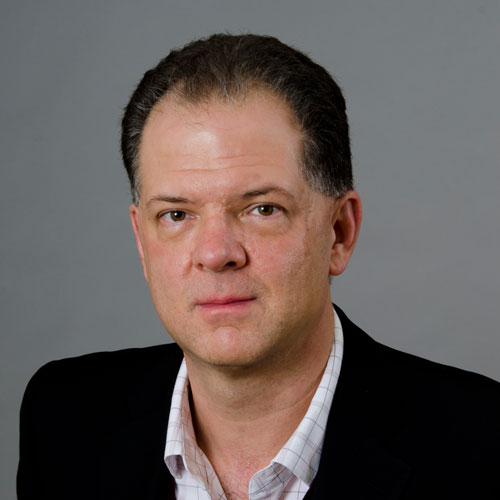
Jon Kull
Lecturer, Film Scoring[email protected]SDSU Composition Repertoire
Audition Requirements (B.M./M.M.)
Undergraduate & Graduate Deadline: February 1, 2027
All Scores, Transcripts, & Statements will need to be uploaded in PDF format to the application. Audio/MIDI Recordings will need to be uploaded in WAV, MP3, or MP4 formats to the application.
- Submit 3 composition scores with audio/midi recordings
- Compositions should demonstrate a variety of styles and media.
- It is strongly suggested that at least one of the compositions be scored for a large ensemble (wind band, orchestra, chorus, jazz band, etc.).
- For students working in the digital domain, submit 1 electronic recording (WAV/MP3) using the DAW of your choice as an optional supplement to the application.
-
For works without score (e.g. electronic music), please submit a 1-page statement describing the process composing the piece.
- 2 letters of recommendation
- Recommenders will email letters as PDFs to Dr. Day directly at [email protected]. Letters of recommendation are due by 11:59PM Pacific Time on February 1, 2027.
- Unofficial grade transcript from past 4 years of education
- 1-page Statement describing your Artistic Practice (Why do you compose? What lead you to composition? What do you hope to accomplish as a composer?)
- 1-page Statement describing your Artistic Process (How do you compose? What programs do you use to write your music? Do you have a performance practice that helps you compose)
- **Graduate Students Only: If considered for a spot in the M.M. composition program, a short virtual interview with the applicant will be required before a final decision is made.
Scholarships for undergrads are available through the university itself, as well as the School of Music and Dance. There are assistantship opportunities for graduate students. Contact Dr. Kevin Day at [email protected]u for further questions.
APPLICATION LINK: https://forms.gle/uUabSYLm82VoL2TPA
The electronic music studio is a continually upgraded, full-featured facility for the study of sound design, audio production and integration with video. All workstations are Macintosh powered and feature Pro-Tools capability.
Design Philosophy: provide students access to a pro-level facility for composition, recording and sound design with up-to-date and state-of-the-art hardware and software. The studio is available for students enrolled in the electro-acoustic composition course sequence.
Facility Description: The studio contains 4 workstations, and is connected to an isolation booth with studio drum kit, and a main recording room with Steinway 7 ft. grand piano and Internet2 high speed internet gateway for simultaneous distributed recording sessions and performances. Workstation details.
- Applied Musicianship
Students will develop advanced professional competency in applied musicianship through written music theory, musical analysis, conducting, singing, and piano skills. - Aural Perception
Students will display deep proficiency in aural musicianship skills including the ability to transcribe melodies, transcribe rhythms, transcribe harmonic progressions, and to demonstrate proficiency in singing musical examples, patterns, and rhythms of advanced difficulty. - Music Technology
Students will apply, and demonstrate proficiency in current and emerging technologies used in the process of creating, analyzing, performing, and reproducing music and in reviewing or carrying out music research. - Music Literacy and Critical Thinking
Students will gain literacy and critical thinking skills by examining music literature and music research through performing, reading, researching, writing, listening, speaking, and reasoning about music. Critical thinking comprises the integration of historical and theoretical domains to identify and to solve problems within and beyond the discipline of music. - Historical and Cultural Foundations
Students will develop the capacity to situate contemporary musical experiences by interpreting a broad range of musical styles and practices from different historical eras and cultural traditions. - Performance and Creativity
Students on a performance track will perform on a primary instrument and will exemplify a high level of competence, both artistically and creatively. A similar level of artistry and creativity extends to those pursuing one of the non-performance tracks (e.g., the creation of music through our Global Composition track or other skills associated with one of our Professional Studies specializations). - Musical Leadership and Community Engagement
Students will exemplify musical competency through rehearsing and conducting SDSU ensembles, community ensembles, or public-school ensembles. Students will employ musical leadership in their participation in music organizations and through performances organized to engage the community. - Pedagogy
Students will assemble knowledge of curriculum development while also developing oral and written communication skills in order to effectively disseminate information, in a classroom setting, through various methodologies. - Synthesis
By the conclusion of undergraduate study in music, students will be able to solve musical problems by combining their capabilities associated with the learning outcomes enumerated above as appropriate to their respective area(s) of emphasis. - General Skills
All music students will hone the ability to collaborate effectively to engage in real-world problems, including academic, personal, and artistic matters. They will become independent learners, capable of accepting validation as a result of successful efforts while maintaining resilience in the face of challenges.
Upon successful completion of the degree program, students will be able to:
- Develop a unique artistic trajectory and an original creative “voice.”
- Develop composition skills at a high level, utilizing informed stylistic choices and artistic expression.
- Develop competency in textual, harmonic, and formal score analysis.
- Compose original works for a variety of ensembles, ranging from classical, jazz, vernacular, electronic, and hybrid, according to the proclivities of the student.
- Learn basic intellectual property law with regard to copyright for original compositions, recordings and performances.
- Demonstrate knowledge of publication standards and practices for streaming media.
- Develop skills for concert preparation and production.
- Develop communication skills for public outreach, including press releases, concert and publication publicity.
- Demonstrate deep knowledge of repertoire studied during program.
- Demonstrate effective analytical and interpretative skills in music theory, musicology and/or performance practice.
- Communicate an advanced understanding and evaluation of musical knowledge and ideas in written and/or oral forms.